
You’ve spent months, maybe years, planning a big thru-hike. Now, you’re out on trail and you or one of your companions experience an emergency. Like a life-or-death or life-altering emergency. As much as we expect to stay safe, as much as we take precautions to avoid illnesses or injury, sometimes, things go sideways. But what happens when you push that SOS button?
Emergency!
I’m an experienced thru-hiker. I hiked the AT in 2022 and then ½ of the CDT in 2024. I know what I’m doing out there and confidently solo hike all over. Last year, I went back for another LASH of the CDT and the unthinkable, unexpected, and unbearable happened. I fell. I fell about 20 feet down a box canyon and landed full-front on a large boulder. I slid off the boulder and into a pool of cool water. I took a breath and tried to get up, but immediately knew I wasn’t going anywhere. You can read the full details of my ordeal here and here. In this post, I’m going to focus on communication devices in emergencies.
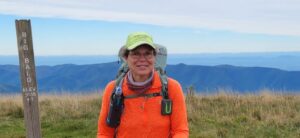
Me, GG, with my Zoleo easily accessible on the AT.
What’s a girl to do in this situation? Especially a solo hiker on a remote trail? Fortunately, I had my Zoleo charged and accessible. My phone was also charged (the Zoleo is paired with your phone for messaging). I had used my Zoleo on my AT hike, my first year on the CDT, and every other hike in the backcountry. I had experience messaging my family and sending pin drops for my location every day. I had read through the SOS procedure, practiced it once when I first got the device, and then reviewed the procedure before each hike. Good thing!
Without hesitation, as soon as I realized I wasn’t going anywhere, I pushed the SOS button. I kept an eye on my phone to see when the signal was sent. At first, it didn’t send. I figured it was because I was in a narrow side canyon. I removed the device from my pack’s shoulder strap and set it on the boulder as far away as I could reach towards the main canyon. The signal sent almost immediately.
PLBs and Satellite Messengers
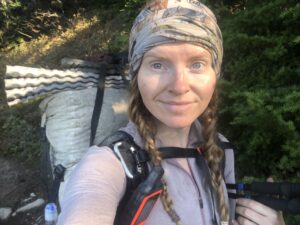
Our Founder, Cheer, carries a Garmin inReach on her shoulder strap.
Most of my hiking friends carry some sort of personal locator beacon (PLB) or satellite messenger. PLBs only send an emergency signal when you need it. They do not have two-way communication. Satellite messengers like mine work with Iridium satellites and support two-way messaging. When I was researching which device to buy, I noticed that these devices have safety measures to prevent accidentally pushing the SOS button. To get a signal, you need a wide, clear view of the sky. The box canyon had a narrow, but clear view of the sky, so it took a bit of time for a satellite to go over that skinny swath of sky. I was able to send and receive messages for a few minutes at a time before we had about 20 minutes of no messaging.
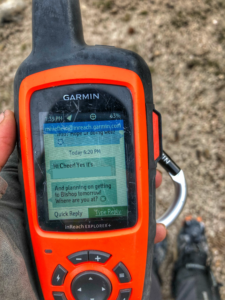
The Garmin inReach is a full-size satellite communicator.
When you hit the SOS button on your device or phone app, emergency response agents contact the local emergency system’s search and rescue (S&R) team. With Zoleo, you can also text the agent about your emergency via your phone, but you don’t need to. Just pushing the SOS button will locate you and start the rescue. However, the S&R teams will have no information about your specific emergency – just where to find you.
During my emergency, I was able to communicate with the agent throughout the event until S&R reached me. If you can text during your emergency, the agent will ask for your name, age, and the nature of your emergency. When you are rescued, the emergency response agent will ask you to end the communication. You have to do it. They cannot close the session from their end. I also used my device to communicate with my family directly. I had some family members set up as emergency contacts for the agent to contact, too, but my family was relieved to be able to communicate directly with me.
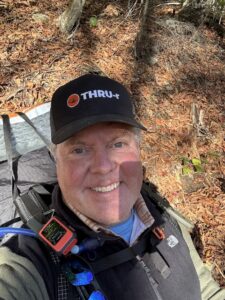
THRU-r President, Paladin, uses a Garmin inReach mini2.
Be aware that it can take time for your rescuers to reach you and get you out. It took about 3 hours from the time I first pushed the SOS button until the first team of four responders got to me. And I was only a few miles away from the nearest roads. A medevac chopper was deployed for my rescue, but the box canyon was deemed too narrow and deep to drop a basket for me. That meant a longer wait for the rest of the team to reach me and carry me out to where the chopper had landed. The more remote you are, the longer it will take for them to get to you. Gathering the S&R team, coordinating the rescue plan, and hiking in to your location all take time.
Strategies for Emergencies
So, what else can you do to aid your rescue? I blew my emergency whistle every 10 minutes. I set a timer on my phone to remind me to blow the whistle at regular intervals. I also wear bright clothing when I hike so I can easily be seen. Both strategies helped the first S&R team to locate me, along with my GPS coordinates, but also would have made it easy for other potential hikers to find me while I was out there. While I waited, I took some pain relievers from my first aid kit. I stayed hydrated and had a few small snacks. I stayed calm. When I started to get upset, worried, or freaked out, I reminded myself that those actions would not help. I needed to stay calm to stave off shock and conserve my energy. But I also knew I would be telling this trail story for years, so I focused on documenting the experience with pictures and composing my blog posts in my head. The rescuers agreed that all of my actions helped me stay safe and calm while I waited. I think they were impressed that I was so calm.
Key Take-aways
Safety strategies I used that kept me safe and helped me get rescued:
- Satellite communicator. It was charged and I knew how to use it.
- Emergency whistle. Many packs have them incorporated on the shoulder strap annually.
- Bright clothing makes it easier to locate you from the air and ground. I was wearing a neon yellow sun shirt.
- First aid kit. Compact but comprehensive is best for thru-hiking. Make sure it is easily accessible.
- Water and snacks. I might have had to wait all night if I were further away from the road.
- My own wits. I stayed alert. I stayed calm. I was able to communicate with the emergency response agent and then with my rescuers.